
My week is fully booked by Sunday night. That is the system.
Every Sunday evening I lock my calendar. Client commitments. Deep work blocks. Transition buffers. By Monday morning I know exactly where my attention goes for five days. No ambiguity.
People say it looks rigid. They are right about the engineering part. I built it because I had to.
I have ADHD.
For most of my career I could solve a client’s entire strategy in one sitting but lose three hours on a Tuesday to context I never planned for. Russell Barkley gave me the language: ADHD is a disorder of self-regulation toward time. His prescription is simple. Externalise everything. Make plans visible. Make time physical.
A locked calendar does all three.
The system I built for my own brain turned out to be the system my entire company needed.
The meeting problem is arithmetic
The meeting problem is not a feeling. It is arithmetic.
A 30-minute meeting that could have been a written update costs you over an hour. The meeting itself plus 23 minutes of recovery plus the context switch that fragments whatever you were building before it started.
Meeting-free days correlate with a 73% increase in productivity. The research says two to three meeting-free days per week is the sweet spot.
At Herbst Group we are eight people across two provinces. We deliver work that competes with firms fifty times our size. Not because we work more. Because we protect what we have.
What protection looks like at eight people
Two meeting-free days per week. Sacred. No internal meetings, no status calls, no “quick syncs.”
No agenda, no meeting.
Async by default. If you can write it, do not schedule it. Friday written updates replaced our status meetings. Nobody misses them.
No back-to-back calls. Ever. The brain does not recover between them. We do not do that to our team.
Two open relationship slots per week. Relationships matter. But two is deliberate.
I did not learn this from a book. I built it because without it I cannot function at the level my clients and my team need me to.
What is essential for some turns out to be good for everyone. The structure I need is the same structure that lets eight people deliver what large teams struggle to match.
Then I watched it happen to someone else
Five years ago, writing mental health days into company policy would have made no sense to me.
I grew up in pharma. Pushing through was the culture. Tired? Push through. Running on empty and making bad decisions? Nobody talked about that part.
I burned out. Not the dramatic kind. The quiet kind. Where sleep disappears. Where patience goes. Where work you love starts feeling like weight. I did not recognise it while it was happening. That is the dangerous part.
Then I watched it happen to someone on my team. Same pattern. Same signs I had missed in myself.
That was the moment. This is not a personal failure. It is a system failure.
Rest is not a reward
At Herbst Group, every one of our eight people matters. So we built protection into the structure.
What we put in writing:
- Three paid mental health days per year. No certificate. No justification. You take the day because you need the day.
- Proactive workload monitoring. Consistently working beyond hours triggers a check-in within 48 hours. Not a performance review. A conversation.
- If someone has not taken leave for an extended period, we do not congratulate them. We encourage them to stop.
Rest is not a reward. It is a requirement.
I still get it wrong. The ADHD brain wants to do everything at once. I have to remind myself that intensity is not effectiveness. That the people around me watch how I work, not just what I say.
If I answer emails at midnight, I am telling my team midnight is normal.
Culture is not what you write in a policy
Culture is what the leader does when nobody is writing it down.
The policy is signed. POL-ESG-003, Health, Safety and Wellbeing. But the policy is not the point.
The point is that every person on this team knows they can say “I need a day” and the answer will always be “take it.”
The locked calendar. The meeting-free days. The mental health days. The async-first culture. None of it started as strategy. It started as survival.
It turns out that what one person needs to function is often what everyone needs to thrive.
The calendar will always fill itself. The only defence is to fill it first with the work that actually matters.
What does your company actually do when someone says they are struggling?
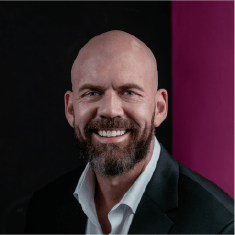
Written by
Dieter Herbst
CEO & Founder at Herbst Group. Working with pharmaceutical commercial leaders across South Africa, Kenya, and Brazil to transform sales force effectiveness through evidence-based approaches.
Connect on LinkedIn